5 Things to Check Before Buying a Smart TV in 2026
Let's be honest — buying a smart TV today is more confusing than it should be. Walk into a store and a salesperson will push the most expensive model on the wall. Scroll online and every listing is drowning in jargon: 4K, HDR10, panel types, refresh rates, "AI sound." It's easy to either overspend on features you'll never use, or save a little and end up with a TV you regret in a month.
Here's the good news: you don't need to understand all of it. After helping thousands of customers pick the right TV, we've found that almost every smart-and-happy purchase comes down to five things you actually need to check before buying a smart TV. Get these right and you'll buy a TV that fits your room, your budget, and your daily binge-watching — without the buyer's remorse.
1. Screen Size — Match It to Your Room, Not Your Wishlist
This is the mistake most people make: they buy the biggest TV they can afford and assume bigger is always better. It isn't. A TV that's too large for a small room actually looks worse — you sit too close, your eyes dart around the screen, and the picture can feel pixelated.
A simple way to decide: think about how far you'll sit from the TV.
- Bedroom / kitchen (sitting 4–6 ft away): a 32-inch TV is the sweet spot.
- Small living room (6–8 ft): 40 to 43 inches feels just right.
- Large hall (8 ft and beyond): 50 inches or more.
2. Resolution & Picture Quality — Where Your Eyes Actually Notice
Resolution decides how sharp the picture looks. You'll mainly see three options: HD Ready, Full HD, and 4K. But here's what the ads won't tell you — resolution only matters relative to screen size.
On a 32-inch screen, an HD Ready display looks crisp and clean for everyday viewing, and paying extra for 4K on that size is usually a waste. Once you go to 43 inches and above, Full HD or 4K starts to genuinely pay off because the larger screen reveals more detail.
So don't get pressured into "4K or nothing." Buy the resolution that suits the size you're getting — that's how you avoid overpaying.
3. Smart Features & OS — The "Smart" Should Actually Be Smart
A smart TV is only as good as its software. This is where cheap TVs quietly cut corners — they call themselves "smart" but run a clunky system with only two or three apps that barely work.
Before you buy, check that it runs a proper operating system (Android is the most popular and familiar), and that the apps you actually use are supported:
- YouTube
- Netflix
- Prime Video and other OTT / streaming apps
Also notice how the menu feels — does it respond quickly, or lag every time you press a button? A laggy interface is something you'll fight with every single day.
4. Connectivity & Ports — Count Them Before You Regret It
Ports are boring to think about… until you're standing behind your new TV holding a cable with nowhere to plug it in. Before buying, make sure it has enough connections for your setup:
- HDMI ports — for your set-top box, gaming console, or laptop. Two or more is ideal.
- USB ports — to play movies and photos straight off a pen drive.
- Built-in WiFi — non-negotiable for a smart TV; it's what lets you stream wirelessly.
- Bluetooth (nice to have) — for wireless speakers or headphones.
A few extra ports today saves you a pile of adapters and frustration later.
5. Sound Quality — The Thing Everyone Forgets
People obsess over the picture and completely ignore the sound — then wonder why dialogue feels flat or they're straining to hear during action scenes. Modern TVs are slim, and slim often means smaller speakers.
Look for a TV with powerful, clear stereo sound so it's enjoyable straight out of the box. And the good news: if you ever want a bigger cinema feel later, you can simply add a soundbar — as long as the TV has the right ports (see point 4!).
One Last Thing: Warranty & Who You Buy From
This isn't on most checklists, but it should be. The cheapest TV online is rarely the best deal if there's no real warranty or support behind it. Before you pay, confirm:
- A genuine warranty (at least 1 year).
- A clear replacement policy in case something arrives faulty.
- A trusted seller with Cash on Delivery (COD) and authentic products.
That peace of mind is worth far more than the few hundred rupees you'd save buying from a random listing.
Putting It All Together
You don't need to be a tech expert to buy a great smart TV — you just need to check the five things that actually matter: the right size for your room, the right resolution for that size, a smart OS with the apps you love, enough ports, and decent sound — backed by a proper warranty.
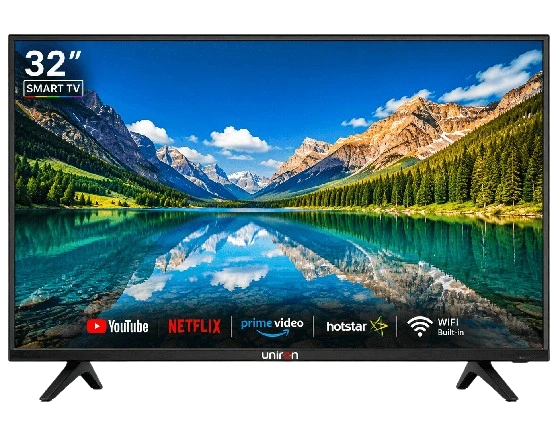
If you want a real-world example of a TV that ticks all five boxes without breaking the bank, take a look at the UNICRON 32 Inch Android Smart TV — HD Ready display, built-in WiFi, YouTube and OTT apps, multiple HDMI & USB ports, and clear stereo sound, all with a 1-year warranty and COD. (If you're specifically shopping on a budget, our guide to the best 32 inch smart TV under ₹10,000 goes deeper.)
🛒 Browse Smart TVs at Tanish Electronics
Frequently Asked Questions
What is the most important thing to check before buying a smart TV?
Screen size relative to your room comes first — a TV that's the wrong size for your viewing distance will never look its best, no matter how good the specs are. After that, focus on resolution, the smart OS, ports, and sound.
Is HD Ready enough, or do I need 4K?
It depends on screen size. For a 32-inch TV, HD Ready looks sharp and 4K is usually unnecessary. For 43 inches and larger, Full HD or 4K is worth it.
Which smart TV OS is best in India?
Android is the most popular and beginner-friendly, with wide app support including YouTube, Netflix and Prime Video. Just make sure your must-have apps are supported and the interface feels responsive.
Why does TV sound matter if I can add speakers later?
You may not always want extra speakers, so good built-in stereo sound matters for everyday use. But if you do want a bigger sound later, make sure the TV has the right ports to connect a soundbar.
Should I buy a smart TV online or from a store?
Either works — what matters is buying from a trusted seller with a genuine warranty, a clear replacement policy, and options like Cash on Delivery for added safety.